By Author Spiritwalker
Most people think about healthcare the same way they think about emergencies: quick fixes, short-term solutions, and the assumption that help is always available somewhere nearby. Band-Aids, first-aid kits, over-the-counter meds, and maybe a few prescriptions stored away “just in case.” That mindset works fine as long as modern systems keep functioning. It fails completely when they don’t.
An off-grid healthcare plan isn’t about replacing doctors or pretending serious medical care isn’t needed. It’s about understanding reality. When supply chains break, clinics close, pharmacies run dry, and emergency services are delayed or unavailable, you are the first line of care. What you know—and what you have prepared for—determines outcomes.
One of the biggest mistakes people make is assuming healthcare disruptions will be brief. History shows the opposite. Shortages, overwhelmed systems, and reduced access tend to last far longer than expected. Even recent events demonstrated how fragile healthcare access can become under stress. When systems are strained, routine care suffers first, and those gaps can turn minor issues into serious problems.
Another common failure is relying entirely on store-bought solutions. Modern medicine is powerful, but it is also highly centralized. Most medications, supplies, and equipment depend on long manufacturing chains and constant transportation. When those systems slow down or stop, shelves empty quickly. An off-grid healthcare plan assumes resupply may not come.
Long-term preparedness means shifting focus from treatment alone to prevention, maintenance, and early intervention. Clean water, proper nutrition, hygiene, sanitation, and physical conditioning matter more than most people realize. Many health issues that overwhelm systems during collapse scenarios are preventable with basic knowledge and disciplined habits.
Herbal medicine and traditional remedies play an important role here—not as magic cures, but as practical tools. Plants that reduce inflammation, fight infection, support the respiratory system, aid digestion, and help manage pain have been used for centuries because they work. Knowing how to identify, prepare, and use them responsibly adds resilience when pharmaceuticals are limited or unavailable.
Wound care is another area where people underestimate the risks. Small cuts and infections become serious quickly without proper cleaning, monitoring, and follow-up. Understanding how to clean wounds, recognize infection, manage inflammation, and support healing can mean the difference between recovery and long-term damage.
Chronic conditions also need to be considered. Many people rely on daily medications and regular care. An off-grid healthcare plan includes contingency thinking: lifestyle changes, alternative supports, backup plans, and honest assessment of vulnerabilities. Ignoring this reality doesn’t make it go away—it just postpones the problem until options are fewer.
Mental and emotional health matter as well. Stress, isolation, uncertainty, and fear take a real physical toll on the body. Learning basic stress management, grounding practices, and community support skills isn’t optional in long-term disruption scenarios. A calm, clear mind improves decision-making and recovery across the board.
The truth is simple: band-aids and first-aid kits are not a healthcare plan. They are a starting point. Real preparedness means building layers—knowledge, supplies, prevention strategies, and adaptable systems that don’t rely on constant outside support. Healthcare is not something you can afford to think about later. By the time you need it, it’s already too late to prepare.
An off-grid healthcare plan is about responsibility. It’s about recognizing that systems fail, access disappears, and self-reliance becomes essential. Those who prepare realistically don’t panic when options shrink. They adapt, respond, and continue living. This is exactly why I wrote Growing, Foraging and Making Natural Medicine: Preparing for the Collapse. That book was created for the reality most people avoid thinking about: a long-term grid-down world where hospitals, pharmacies, and clinics are no longer accessible, and healthcare becomes a personal responsibility rather than a service you can rely on.
The book was written with the understanding that when the power grid fails—whether through an EMP, CME, economic collapse, or systemic breakdown—modern healthcare will not simply be strained, it will disappear. Backup generators run out of fuel. Supply chains stop. Doctors’ offices close. Pharmacies go dark. At that point, stockpiled medications become finite resources, and knowing how to replace medicine becomes far more important than simply storing it.
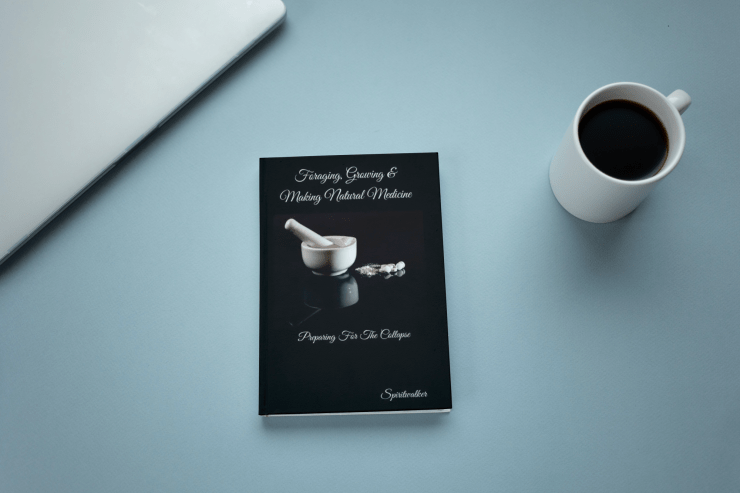
Growing, Foraging and Making Natural Medicine focuses on exactly that problem. It teaches how to grow medicinal herbs off-grid, even in poor or damaged soil, how to forage responsibly in the wild, and how to identify the plants that matter most when antibiotics, antivirals, and anti-inflammatory medicines are no longer available through conventional means. This is not theory or television survival fantasy—it is based on lived experience and decades of real-world herbal practice.
The book walks through the full process: raising and finding medicinal plants, properly diagnosing common ailments, preparing remedies, and using those remedies safely and effectively. Readers learn how to make tinctures, decoctions, infusions, salves, and oils, how to store both herbs and finished medicines long-term, and how to build a small but reliable natural medicine supply that does not depend on modern systems.
This book—and the entire Preparing for the Collapse series—was written because I saw a clear problem in the preparedness community. Most people are taught how to stockpile. Very few are taught how to live once stockpiles are gone. Healthcare, like food, cannot be treated as a one-time acquisition. It must be produced, maintained, and understood.
Real preparedness means being able to care for yourself and your family when there is no backup plan left. Learning how to grow, forage, and make your own medicine is not optional in a true long-term collapse scenario—it is foundational. That is what this book teaches, and why it exists as part of a larger collection focused on living past the first year, not just surviving the initial shock.
Discover more from Forgotten Wisdom Blog
Subscribe to get the latest posts sent to your email.
 Forgotten Wisdom Blog